

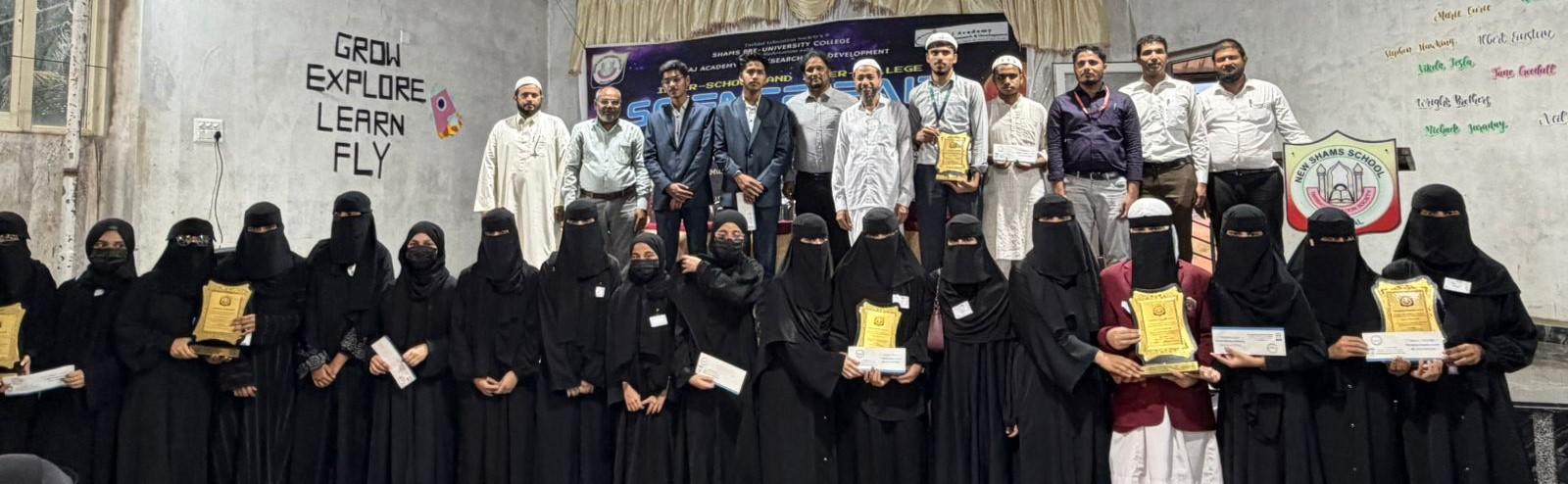
Bhatkal: Aiming to foster scientific temperament among students, promote research-based learning and strengthen analytical thinking, the second Bhatkal inter-school and inter-college science fair was successfully organised on 20 November at the Dr M. T. Hassan Bappa Auditorium. The event was held jointly by Shams PU College and the AJ Academy of Research and Development.
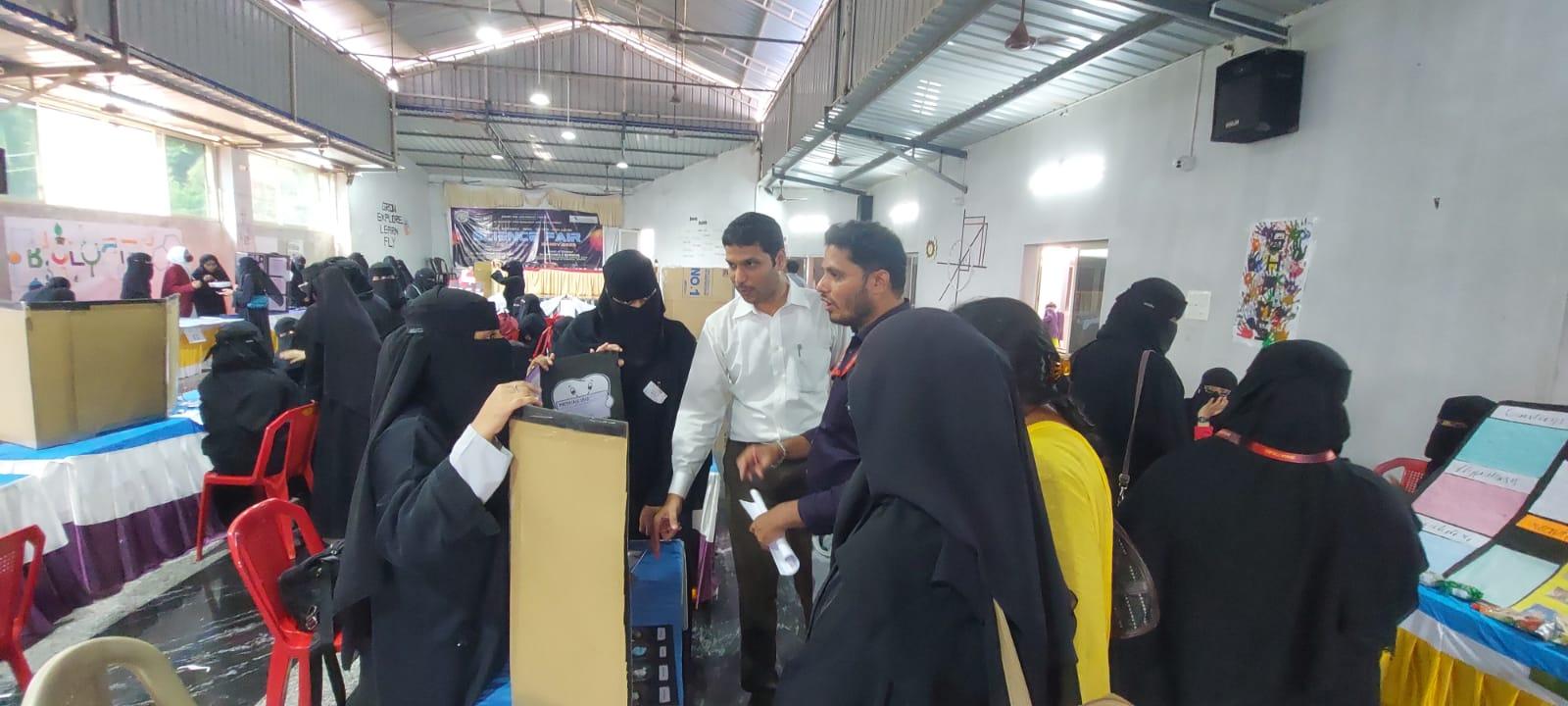
A total of 52 teams representing 10 educational institutions from Bhatkal and surrounding areas participated in the fair, presenting their research-driven projects and scientific experiments. Chief guest Dr Mohammed Zubair Kola, vice-president of Anjuman Hami-e-Muslimeen, highlighted the importance of quality education and stressed the need to cultivate research-oriented and scientific thinking among students from an early age.
Guest of honour Dr Virendra V. Shanbhag, principal of The New English PU College, underscored the relevance of skill-based education and cited examples of real-world innovative achievements. Abdullah Javed, director of the AJ Academy of Research and Development, emphasised the significance of originality, proper methodology and scientific rigour in research. The programme was presided over by Nazir Ahmed Qazi, chairman of Tarbiat Education Society.
Society president Mohammed Ismail Mohtesham, vice-president Syed Qutb Burmawar Nadwi, Maulana Azizurrahman Ruknuddin Nadwi, Syed Shakeel S. M. and other dignitaries were present on the dais.
The event began with the recitation of the Quran by Ahmed Zain, followed by its translation by Mohammed Azaan. New Shams School principal Liyakat Ali welcomed the guests, while Shams PU College principal Mohammed Raza Manwi introduced the judges. Science fair convener Dr Mamatha Naik expressed gratitude at the end of the programme.
Experts from various fields served as judges, including Prof Quratulain Waseem H., Dr Chetan Pai, Prof Al Shifa, Dr Vinayak Anand Kamat, Dr Rupa D. Shanbhag and Prof Shaheeda Ikkeri.
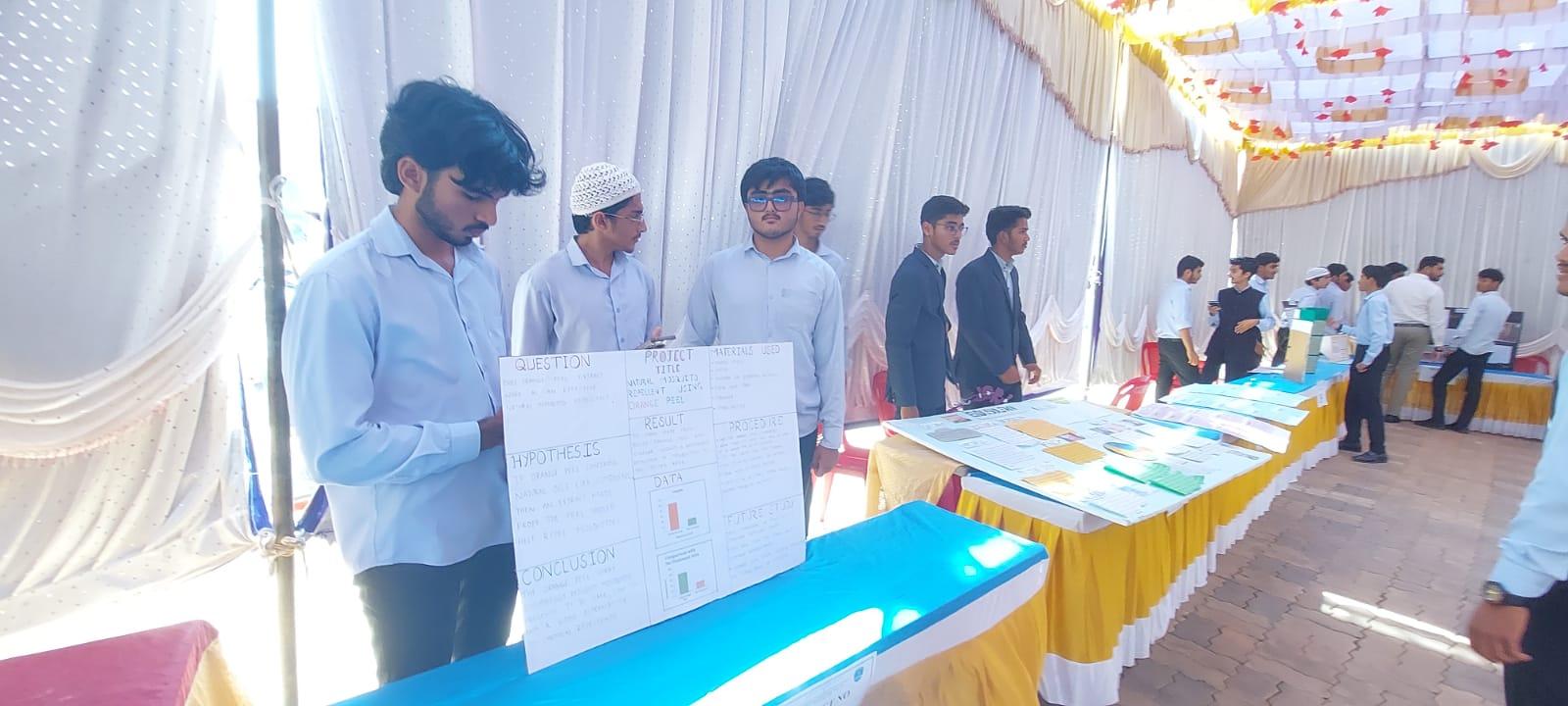
Unlike conventional science exhibitions, this fair was entirely research-oriented, with students presenting their work supported by data, models and practical demonstrations.