

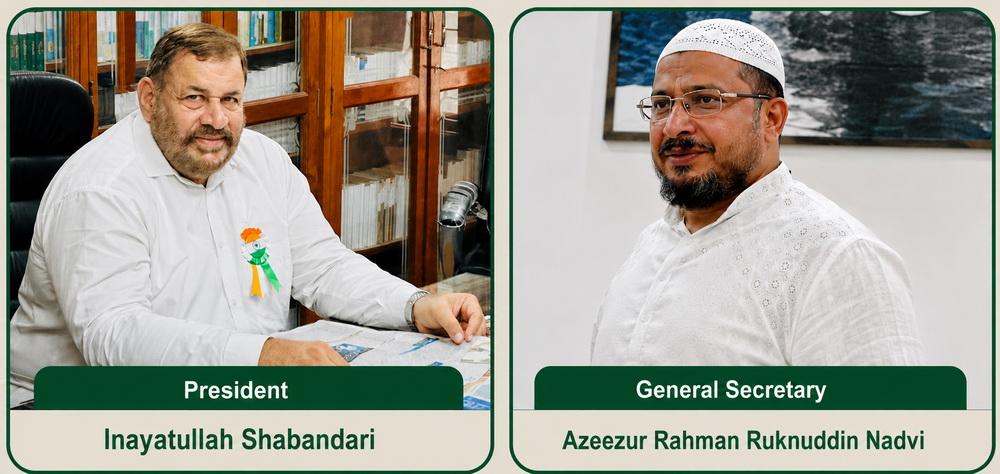
Bhatkal: Prominent social worker Inayatullah Shabandari has been re-elected president of Majlis-e-Islah-wa-Tanzeem, a century-old organisation and one of Uttara Kannada district's most influential social bodies, while Azizur Rahman Ruknuddin Nadvi has been elected as the Tanzeem's General Secretary for the new three-year term.
The newly elected office-bearers also include Pillur Mohammed Sadiq as First Vice-President, Qamar Sada as Second Vice-President, Ruknuddin Abdul Salam as Third Vice-President, Iqbal Suhail as Secretary for Administrative Affairs, Damudi Abdul Mubeen as Finance Secretary, and Qamri Bilal as Auditor.
The elections for the Tanzeem's new three-year term were held on May 12, during which 45 members were elected. At the first meeting of the newly constituted body on June 12, ten additional members were inducted into the executive committee, while ten members from the previous administration were also included in the new governing body.
The Tanzeem's executive body comprises 137 members, including five patrons. It includes 65 members from Bhatkal and seven Shura members, along with 17 representatives from various cities across India and 40 members residing overseas, many of them in Gulf countries. The newly elected president is yet to nominate three additional members to complete the executive structure.
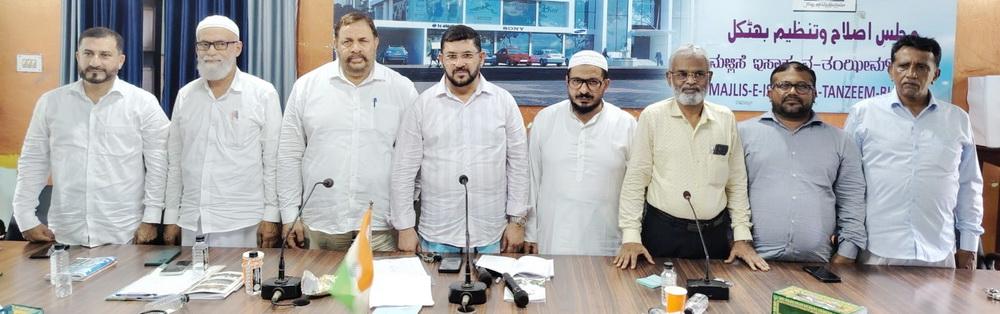
Election Commissioner Mohiddin Altaf Kharuri said the entire electoral process was conducted in a transparent, orderly and peaceful manner. He credited the successful conduct of the elections to the cooperation extended by local sports centres in Bhatkal, as well as Jamaats operating across India and overseas.
According to Kharuri, the election of office-bearers was held under the chairmanship of Tanzeem patron S.M. Syed Mohiddin and was attended by 96 members.
A notable feature of this year's elections was the significant representation given to new entrants, with more than half of the members in the newly constituted administrative body being fresh faces. The development is being viewed as a reflection of the growing influence of younger leadership and increasing support for active community participation within the organisation.
Senior members described the transition as one of the most significant generational shifts in the organisation's history. They expressed hope that the induction of a large number of younger members would bring fresh ideas and renewed energy to efforts aimed at addressing public issues, expanding social welfare initiatives, and promoting communal harmony and civic engagement.