

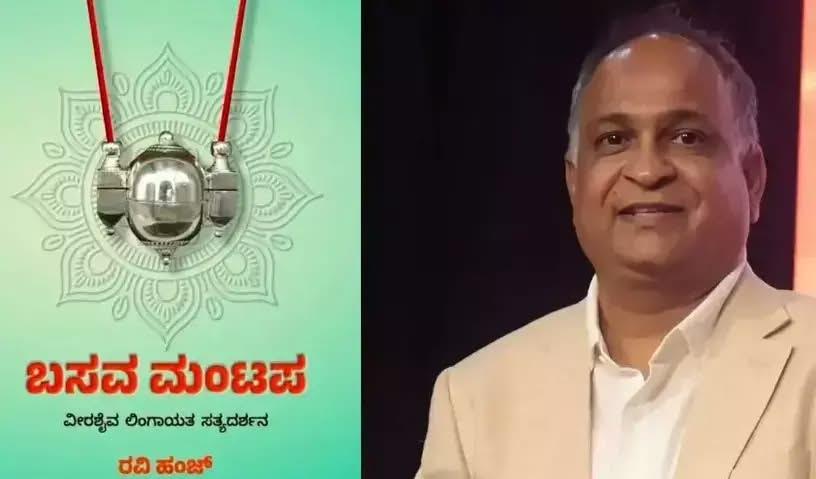
Bengaluru: Protests have intensified across Karnataka over alleged objectionable remarks about 12th-century social reformer Basavanna and the Lingayat community in the Kannada book Basava Mantapa, with six FIRs registered against its author Ravi Hanj in different parts of the state. Hanj was detained at Kochi International Airport on November 21 while preparing to board a flight to Dubai and was subsequently taken into custody by Karnataka Police.
The controversy centres on the nearly 600-page book, which brings together articles written by Hanj and published in the Kannada daily Vishwavani over a period of one to two years. It was released on November 15 at the FKCCI auditorium in Bengaluru. The issue gained wider attention after an interview with Hanj at the Vishwavani office was circulated on social media.
Aravind Jatti, president of the Basava Samiti, lodged a complaint at Bengaluru's High Grounds Police Station, alleging that the book and the author's remarks distorted Basavanna's teachings and hurt the religious sentiments of the Veerashaiva-Lingayat community. The complaint particularly objected to the interpretation of Basavanna's vachana, "Kalabeda, Kolabeda, Husiya Nudiyalu Beda" — a message urging people not to steal, kill or speak lies. The complainant alleged that Hanj's interpretation portrayed Basavanna as a thief and a murderer. Objections were also raised over the use of the term "Lingahata" instead of Lingayat and remarks concerning the community's identity, its religious figures, leaders and the Kalyana movement.
Cases were registered against Hanj and Vishwavani editor and publisher Vishweshwar Bhat under various provisions of the Bharatiya Nyaya Sanhita, including Sections 192, 196(1), 353(2) and 299. Separate complaints were also filed in other districts. Subsequent media reports confirmed that six FIRs had been registered against the author across Karnataka.
The state government has also intervened in the matter. At a Cabinet meeting chaired by Chief Minister Siddaramaiah on November 19, the government decided to confiscate copies of Basava Mantapa and initiate legal action against its author and publisher. It also decided to approach the Union government seeking the removal of the related videos from social media platforms. Deputy Chief Minister D.K. Shivakumar announced the Cabinet's decision, while other ministers, including Eshwar Khandre, criticised the remarks.
As Hanj was not available to the police, a Look Out Circular was issued against him. He was detained by security personnel at Kochi airport on November 21 after the alert was issued. Karnataka Police subsequently reached the airport and took him into their custody. Reports said he had been preparing to travel to Dubai.
The controversy has triggered demonstrations in Bengaluru, Belagavi, Bidar, Kalaburagi and other parts of the state. Protesters have demanded strict action against the author and publisher, a ban on the book, an investigation by a Special Investigation Team and withdrawal of government advertisements to Vishwavani. At a protest in Athani, Prakash Mahajan reportedly announced a reward of Rs 5 lakh for anyone who killed Hanj and also issued a threat to behead him. The statement drew attention for its openly violent nature.
The dispute over the interpretation of Basavanna's teachings and Lingayat identity is not new to Karnataka. In November 2024, the publication of Vachana Darshana triggered strong objections after it presented Basavanna's vachanas as an extension of Vedic teachings. The book was published by Ayodhya Publications and Prajna Pravah, organisations associated with the Rashtriya Swayamsevak Sangh (RSS). In response, scholar Meenakshi Bali and other intellectuals brought out Vachana Nija Darshana, challenging what they described as an attempt to appropriate Basavanna's philosophy and reinterpret his teachings within a Vedic framework.
Seen against this background, the objections to Basava Mantapa have once again brought into focus the ideological contest over Basavanna's legacy, the distinct identity claimed by sections of the Lingayat movement and competing interpretations of Karnataka's social and religious history. The recurring interventions by RSS-linked organisations in the interpretation of Basavanna's vachanas have raised questions about attempts to place distinct social reform traditions within a broader Vedic framework. Critics argue that such interpretations risk obscuring the anti-caste and egalitarian foundations of the 12th-century movement.