

Bhatkal: Complaints have surfaced from several residents of Bhatkal alleging undue delays and harassment in the issuance of new passports, particularly in cases where applicants had criminal cases registered against them more than a decade ago but were subsequently acquitted or the cases were closed by courts.
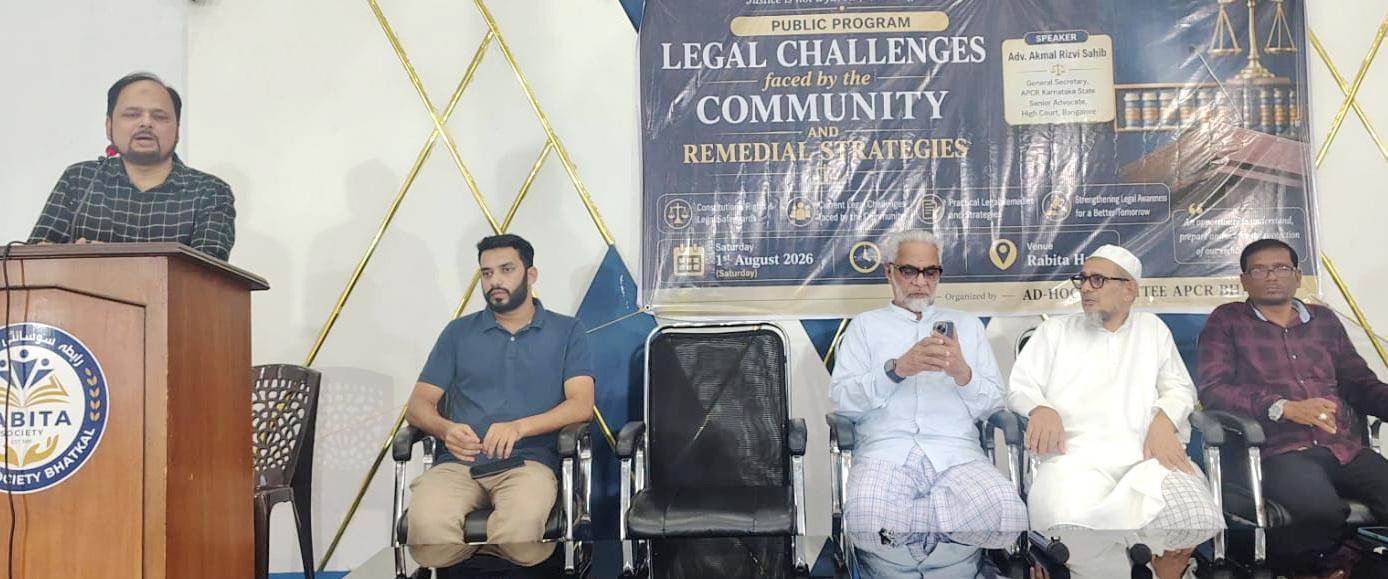
Addressing a public awareness programme organised by the Association for Protection of Civil Rights (APCR) at Rabita Hall in Bhatkal, APCR Karnataka State General Secretary and High Court advocate Akmal Rizvi said affected applicants need not remain in the dark about the status of their passport applications and should make use of the Right to Information (RTI) Act to seek official updates.
According to Rizvi, applicants can file an RTI application with the Ministry of Home Affairs (MHA) requesting a date-wise status of their passport application, including details of the stage at which it is pending and the reasons for any delay. He said the process compels the authorities to provide a formal response and often helps applicants understand the exact status of their cases.
Rizvi observed that several people in Bhatkal have reported difficulties in obtaining fresh passports despite criminal cases against them having been disposed of by courts nearly 10 to 12 years ago. He said such old and concluded cases should not continue to cause unnecessary hardship without transparency regarding the processing of passport applications.
Speaking on broader public grievances, Rizvi urged citizens to rely on documented communication rather than only verbal representations before government officials. He advised people to submit complaints and applications in writing and retain an acknowledged copy bearing the office seal as proof of submission, stating that written records are essential for ensuring administrative accountability and follow-up.
During the programme, he also highlighted legal remedies available to citizens in dealing with various administrative issues and encouraged the public to make effective use of statutory mechanisms such as the RTI Act to safeguard their rights and seek timely redressal of grievances.