

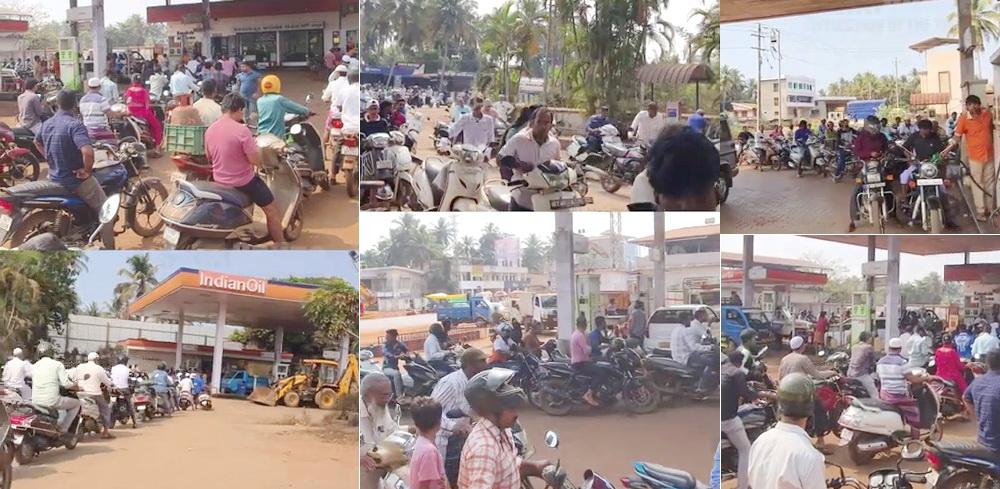
Bhatkal: Long queues were witnessed at several petrol pumps across Bhatkal on Wednesday as fears of possible fuel shortages and price hikes gripped residents amid escalating tensions in the Middle East.
Locals were seen not only refuelling their vehicles but also filling petrol into bottles as a precautionary measure. The rush follows military strikes by the United States and Israel on Iran and Tehran’s subsequent retaliatory actions, which have triggered global concerns over crude oil supply disruptions.
According to international media reports, Iran has restricted maritime movement through the Strait of Hormuz — a critical global oil transit chokepoint that connects the Persian Gulf with the Gulf of Oman. A significant portion of the world’s crude oil shipments passes through this narrow waterway, and any disruption along this route immediately impacts global energy markets.
Following reports of shipping restrictions, Brent crude prices surged past $85 per barrel on Tuesday, marking the third consecutive session of gains. Analysts warn that if the geopolitical confrontation continues or intensifies, further volatility in global oil prices cannot be ruled out.
India imports a substantial share of its crude oil from Gulf nations, with nearly half of these imports passing through the Strait of Hormuz. Energy experts note that prolonged instability in the region could pose challenges to supply chains and may affect domestic fuel pricing.
Union Petroleum Minister Hardeep Singh Puri has stated that India currently maintains adequate reserves of crude oil and petroleum products, including petrol, diesel, and aviation turbine fuel (ATF), sufficient to meet domestic demand in the short term. Official sources indicate that oil marketing companies hold approximately 25 days’ worth of crude stocks, along with an additional 25 days’ supply of refined petroleum products.
However, despite official assurances, public concern remains high. Many citizens fear that rising international crude prices could soon translate into higher retail fuel costs.
Energy analysts caution that panic buying and hoarding could create artificial local shortages, further intensifying public anxiety. At present, fuel supplies continue without disruption, but global markets remain on edge as geopolitical developments unfold.