

Dubai — The Middle East plunged deeper into conflict on Sunday as Iran intensified its retaliatory missile and drone strikes following unprecedented joint air attacks by the United States and Israel on Iranian territory, destabilising the broader region and prompting urgent civil defence measures across Gulf states.
In the most significant escalation of hostilities in recent years, coordinated military strikes by the United States and Israel against Iran late Saturday reportedly killed Iran’s Supreme Leader, Ayatollah Ali Khamenei, along with several senior Iranian officials in Tehran, according to Iranian state television and multiple international outlets. Tehran declared a period of national mourning and vowed firm retaliation.
Iran responded with a barrage of missiles and drone attacks targeting Israeli territory and US military installations located in Gulf Arab states hosting American assets. Iranian forces struck bases in Qatar, Kuwait, Bahrain, the United Arab Emirates and Saudi Arabia, prompting air defence systems to engage multiple incoming threats.
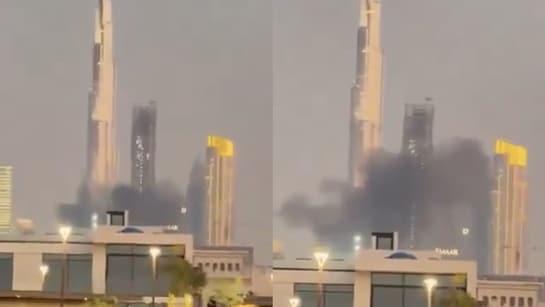
In the United Arab Emirates, at least two people were reportedly killed in missile strikes and several others injured, while parts of Dubai’s Palm Jumeirah and other urban areas showed signs of impact and rising smoke. Authorities issued emergency alerts urging residents and visitors to seek immediate shelter as a precaution against further strikes.
The conflict has caused severe disruption to regional and global air travel. Major Gulf air hubs, including Dubai International Airport, Abu Dhabi’s Zayed International Airport and Doha’s Hamad International Airport, have been forced to halt or reroute operations amid widespread airspace closures and temporary suspensions by airlines such as Etihad Airways. Reports indicate hundreds of thousands of travellers stranded or diverted as flights across the Middle East were grounded or rerouted due to safety concerns.
Across the Gulf Cooperation Council, national governments have taken unprecedented civil defence steps. The UAE Ministry of Interior issued rare nationwide emergency alerts broadcast directly to mobile devices, reflecting heightened civilian risk perception amid missile threat warnings. �
The broader geopolitical fallout has been swift. Saudi Arabia condemned Iran’s strikes on Gulf states, warning of “grave consequences” if attacks continue, and affirmed solidarity with regional partners.
Meanwhile, Russia denounced the US–Israeli strikes as an “unprovoked act of armed aggression” and called for an immediate return to diplomacy, offering to mediate talks at the United Nations.
The intensified conflict has also reverberated across global markets. Oil prices surged sharply given fears over stability in the Strait of Hormuz—a vital chokepoint for roughly 20 percent of the world’s crude supply—as maritime transport and insurance costs climbed amid navigational risks in the Gulf.
Despite ongoing hostilities, diplomatic avenues have been strained. Recent nuclear negotiations between Iran and Western powers—which mediators had described as the most substantive in years—were effectively derailed by the sudden outbreak of violence.
Regional leaders continue to call for calm and restraint, but with no formal ceasefire in place and retaliatory exchanges still reported Sunday morning, analysts warn that the crisis could evolve into a prolonged and unpredictable confrontation involving multiple states across the Middle East.