

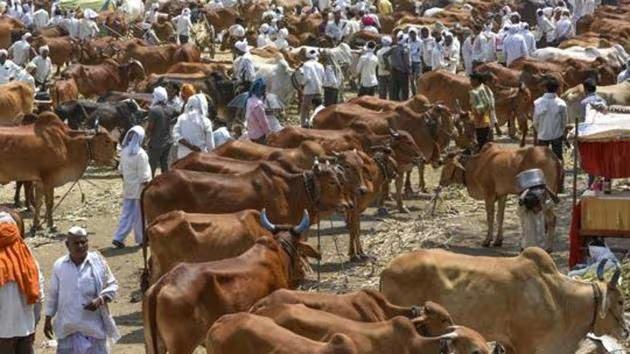
Mumbai — Over a million members of the Qureshi community in Maharashtra have been on strike since July 22 to protest escalating harassment by self-styled cow vigilantes. The protest has brought livestock markets in Akluj and Sangola in Solapur district to a complete halt, forcing distressed farmers to abandon unproductive cattle on roads. The crisis has now compelled the state government to intervene, with Deputy Chief Minister Ajit Pawar directing police to prevent so-called “gau rakshak” groups from stopping and inspecting vehicles transporting cattle.
Apsar Qureshi, a member of the All India Jamiat-ul-Quresh and the Livestock Traders’ Committee, told reporters that despite carrying valid documentation, traders face violence from vigilante groups. “We are running our business legally, but we are offered no protection. Increasing harassment has left us with no choice but to shut down our operations,” he said.
According to Qureshi, local police sometimes invoke stringent provisions of the Maharashtra Control of Organised Crime Act (MCOCA) against them. “Even when the courts rule in our favour, we are asked to pay bribes to get our cattle released. Vigilantes stop vehicles on highways, seize livestock despite complete paperwork, and deliberately damage our vehicles,” he alleged.
The Qureshi community, numbering over 2.5 million across the state, has a significant stake in the livestock and meat trade. In 2015, the BJP–Shiv Sena government under Devendra Fadnavis amended the Maharashtra Animal Preservation Act, 1976, to ban cow slaughter. This move crippled the trade of bulls and other non-productive cattle, wiping out the livelihoods of over 500,000 traditional butchers.
Community leaders argue that while the Constitution guarantees the right to livelihood, the current environment effectively denies them this right. They claim religious identity has made them easy targets, with neither the police nor the government offering substantial support.
The strike has dealt a heavy economic blow to the state’s meat and cattle trade, estimated at ₹300 crore a month. Supply to neighbouring states, including Goa, has been severely disrupted. In Goa, the usual daily supply of 20 tonnes of meat has dropped to between two and five tonnes, pushing retail prices up by 20 percent. Bone-in meat now costs ₹400–₹420 per kg, while boneless cuts sell for up to ₹500 per kg. Representatives of the butchers’ associations estimate total monthly losses have exceeded ₹460 crore.
Akluj’s weekly livestock market, which generated about ₹50 lakh in trade every Monday and saw 400–500 animals sold, now stands deserted. Market secretary Rajendra Kakde said farmers are left with no option but to release their unsellable cattle onto the streets. Sangola’s livestock market has also been completely shut.
While the state government has instructed police to curb vigilante interference, Qureshi community leaders say their strike will continue until they receive firm legal assurances and an end to harassment.