

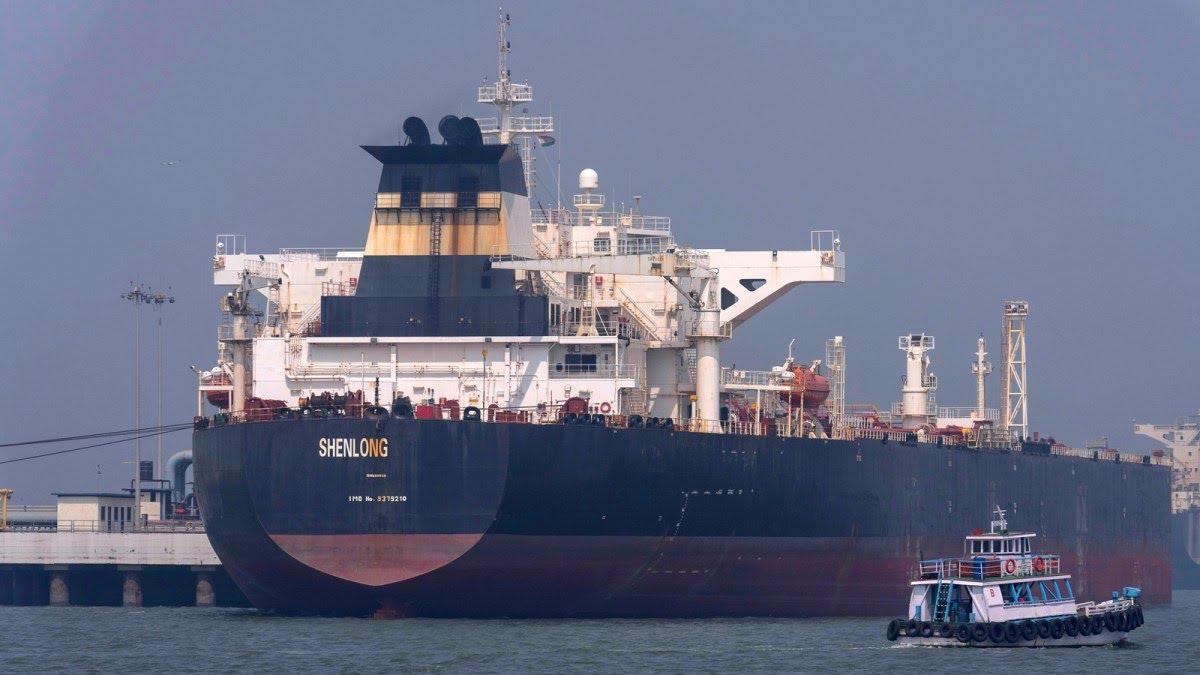
New Delhi: Amid rising tensions in the Persian Gulf and growing concerns over maritime security in the region, two crude oil tankers have successfully reached India after transiting the strategically sensitive Strait of Hormuz, offering some reassurance regarding the country’s energy supplies.
According to international media reports and shipping data, one of the vessels, the Suezmax tanker Shenlong, sailing under the Liberian flag, carried crude oil from Saudi Arabia’s major export terminal at Ras Tanura and arrived at an Indian port on the country’s western coast. The tanker is reported to be among the first India-bound oil carriers to cross the Strait of Hormuz after recent security concerns escalated in the region.
Another oil tanker also completed the passage through the narrow waterway around the same period and safely reached Indian waters. The arrival of these vessels is being seen as significant as several ships had slowed down operations or taken precautionary measures while navigating the region due to heightened geopolitical tensions.
Reports indicate that while passing through the Strait of Hormuz, both vessels temporarily switched off their Automatic Identification System (AIS) signals — a practice sometimes adopted by ships transiting sensitive or high-risk maritime zones. As a result, their movements were briefly not visible on public ship-tracking platforms before they later reappeared after exiting the Gulf waters.
The Strait of Hormuz is regarded as one of the world’s most critical energy chokepoints. A substantial portion of global crude oil shipments passes through this narrow maritime corridor connecting the Persian Gulf to the Arabian Sea. India, which relies heavily on crude oil imports from West Asian producers, receives a significant share of its energy supplies through this route.
Recent tensions in the Gulf region, coupled with fears of attacks on commercial vessels, had raised concerns about potential disruptions to global oil flows and the possible impact on energy-importing countries such as India.
Indian authorities have been closely monitoring developments in the region. Diplomatic channels are reportedly in contact with countries in West Asia to ensure the safety of commercial shipping routes and safeguard the continuity of energy supplies to India.
Energy market analysts say the safe arrival of the two tankers offers a measure of reassurance for the immediate supply situation. However, they caution that the overall outlook remains uncertain as geopolitical developments in the Gulf continue to evolve.
If maritime traffic through the Strait of Hormuz continues without major disruptions, more crude oil cargoes are expected to reach India in the coming days, helping maintain stability in the country’s energy supply chain despite ongoing regional tensions.