

Today, November 28, 2026, marks exactly 30 years since the passing of Janab Syed Abdurrahim Irshad Saheb, poet and journalist. Three decades on, his nazms continue to resonate at gatherings and in memories, finding listeners who were not yet born when he passed away. Mr AFTAB HUSAIN KOLA pays a heartfelt tribute to the doyen of Navayath literature, whose words continue to keep the lamp of Navayath culture burning.
BY AFTAB HUSAIN KOLA
In the vivid prism of Navayath culture, one name glows like a lantern lit against the dusk: Syed Abdurrahim Irshad, a gifted poet and brilliant writer-journalist whose verses and prose carry the quiet weight of wisdom and reverence.
He was born on May 15, 1931, in the coastal town of Bhatkal, and from his earliest years, the pen called to him. Irshad was a luminary of Navayathi literature, and his voice moved freely across several languages: Navayathi, Urdu and English most fully, with Hindi and Konkani finding a place in his writings as well.
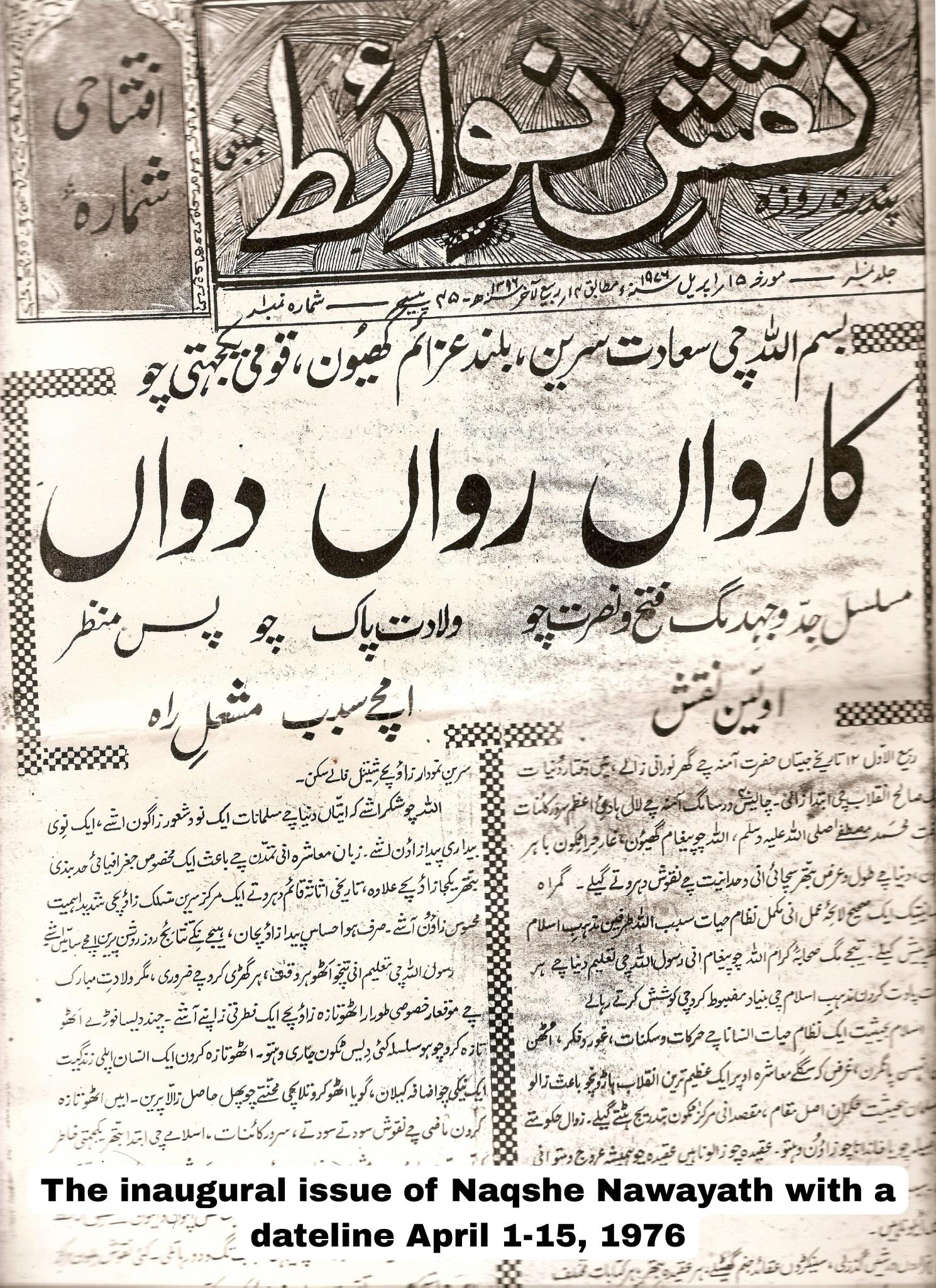
In 1976, he gave his community an enduring gift: Naqshe-Nawayath , a publication in the Navayathi language. It became more than a journal; it became a mirror in which a people could recognise themselves and a thread binding their identity across the years.
Fifty years later, in an age when so many printed pages have faded into pixels, it continues to reach its readers, its flame kept burning by Moulana Abdul Aleem Qasmi, one of its founders.
Irshad’s education and early journalism
His education spanned several institutions. He spent his early years in Palakkad, where his father ran a flourishing hosiery business. He began his schooling at St Joseph’s European Boys’ High School in Calicut before spending a brief period at St Aloysius PU College in Mangaluru. In Mumbai, he honed his skills at Bharatiya Vidya Bhavan’s Rajendra Prasad Institute of Communication and Management, earning a certificate in journalism, advertising and printing. He later obtained a certificate in travel and tourism from Radio Bhuvan.
The ink was already in his blood. While still in Mangaluru, he brought out his own publications: Audience , an English club newsletter, and the Urdu magazines Tanzeem and Sagar . In Mumbai, he published The Message , an English newsletter circulated among a private circle of readers.
His voice kept finding new homes. He wrote columns for ALPHA , the in-house newsletter of Bharatiya Vidya Bhavan, and contributed to TIDE , March of the Nation, Inquilab and Hindustan , each weaving another thread of ink into the larger story of Indian journalism.
At mushairas and Konkani sammelans, he was a presence not easily forgotten. His commanding voice and powerful verses held audiences spellbound, and he often carried the evening simply by stepping onto the stage. He received the Karnataka Konkani Sahitya Academy award in 1995 in the journalism category.
Classic Navayathi compositions
In poetic works such as “Latan”, “Markaz Detha Awaaz” and “Bhatkalchi Sarzameem Pala Tumka Apavtha”, Irshad captured the spirit of bygone eras, stirring nostalgia and celebrating the enduring spirit of his community. His Navayath geets depict everyday life, customs and traditions unique to the Navayaths, opening a window into their cultural heritage.
Among his most tender portraits is that of the Navayath marriage procession, in songs such as “Yaagey Sayyanu Pang Bahar Padlo”. He narrates the eager anticipation surrounding the day when the groom, accompanied by relatives and friends, makes his way through the streets to the bride’s home for the first reception, to the strains of a traditional Arabic melody. It is a ceremony seen less and less these days but his song keeps it alive.
“Amchi Sar Zameen Pala Tumka Apavtha…” is a timeless melody that speaks to the heart of every Navayath living outside Bhatkal, particularly in the GCC countries, where the diaspora has a large presence. It is the voice of the native soil, gently calling its children back to Bhatkal.
In another masterpiece, and one of my personal favourites, “Markaz Detha Awaaz”, he evokes the Markaz as a sanctuary of cultural identity -- a place where traditions are cherished, languages resonate with pride and unity shines as the guiding light. In “Mozo Kukdo Udoon Gelo Ge”, he shows how laughter can open the door to deeper understanding and how humour can help us weather life's trials with wisdom and grace.
A spectacular visual and poetic tribute was paid to Irshad in Muscat during an Eid Milan programme organised by Bhatkal Muslim Jamat Muscat in 2012. A brilliant stage performance brought his classic songs to life. His celebrated song “Latan” was recreated gloriously in a spellbinding enactment, with his grandson singing it live as the bygone scenes unfolded in perfect rhythm with the lyrics.
Evoking the days when Bhatkal had yet to be illuminated by electricity, the song recalls a municipal worker making his rounds at dusk, lighting the lanterns atop street lamp posts and chasing away the gathering darkness. The performance transported the audience to a bygone era, rekindling memories of a simpler time when the humble lantern was a familiar part of everyday life and a beacon of light. The presentation, directed by this writer, was a runaway hit with the audience.
His composition “Anjuman O Anjuman” rose like a wave through the halls during Anjuman’s Golden Jubilee celebrations in 1973, becoming an instant sensation as it captured the institution’s remarkable 50-year journey. His poetry also delves into Islamic faith and spirituality, in celebrated works such as “Istighfar” (seeking forgiveness), “Merajnama”, “Rizq” and “Qabrait Palthalo”.
Yet he was not bound by solemnity alone. At times, he sharpened his verse into satire, holding up a mirror to community development organisations in nazms such as “General Secretary”, “Qouma Chi Tameer” and “Amchi Jamat Zindabad”. His lullaby “Laqte Jigar” is cherished for the tenderness with which it lulls children to sleep. In “Sammyu Ek Zaya” and “Markaz Detha Awaaz”, he raises a ringing call for solidarity, fraternity and harmony.
Irshad tried his hand at a few businesses, including hosiery, a gifts and novelties agency, and transport. But his heart belonged to the arts.
Creativity came naturally to him. When we were looking for names for the two Bhatkal cricket teams that were to represent the town in the district-level Bhatkal Times Challenge Cup in 1992, he came up with two names almost instantly: Bhatkal Supers and Bhatkal Colts. We readily accepted his suggestions, which perfectly captured the spirit of the teams.
A personal remembrance
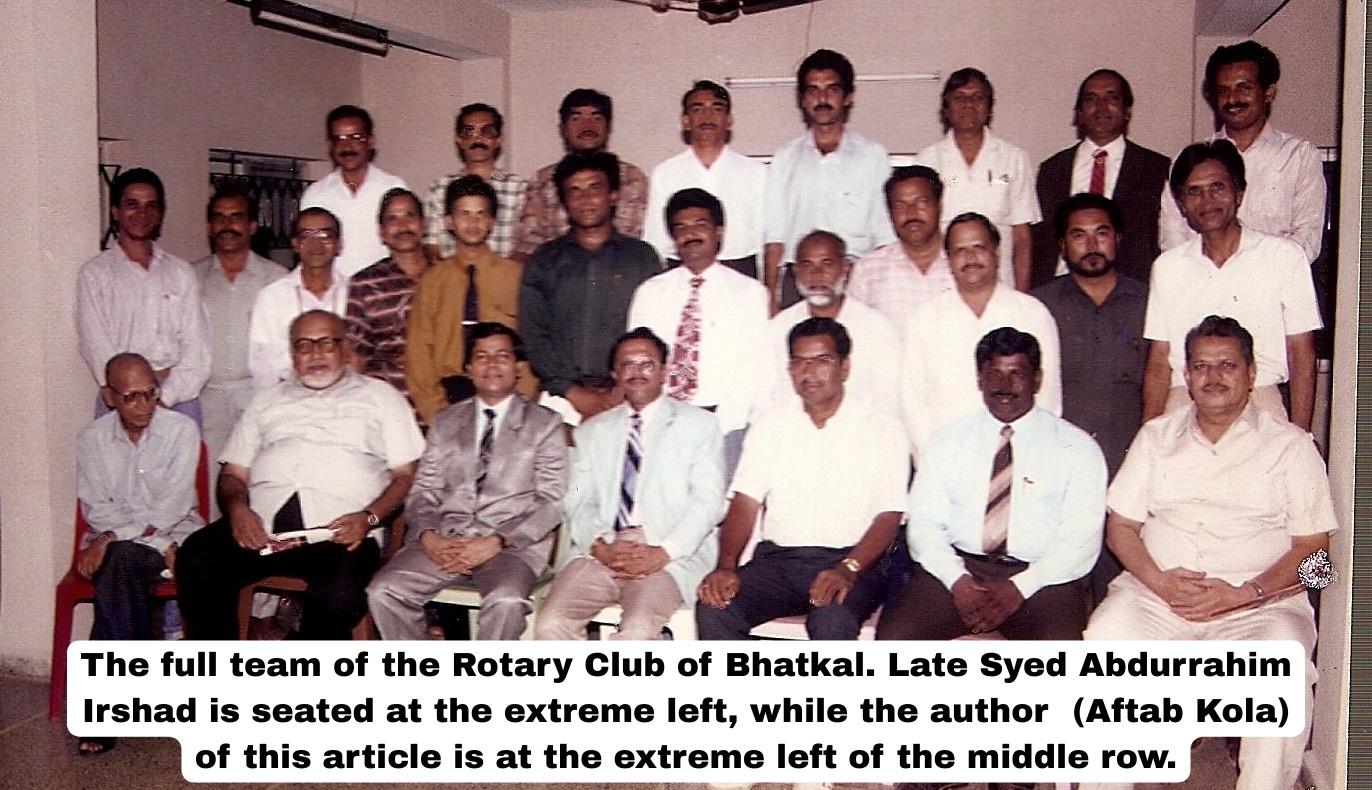
As a fellow journalist, I cherish warm memories of my years with Irshad. When I joined the Rotary Club of Bhatkal, Irshad, already a senior member, placed his trust in me and recommended me as editor of the club’s in-house bulletin, Rotaraspect . I went on to produce a series of creative issues that won praise from the Rotary district governor.
Our bond extended far beyond work. We shared many journeys and treasured moments, and delighted in each other’s company.
Irshad’s column in Bhatkal Times , aptly titled “Penpricks” -- a witty twist on “pinpricks” -- tickled readers with its satirical take on society’s follies and foibles, deftly pricking pretensions and exposing the shortcomings of the social order.
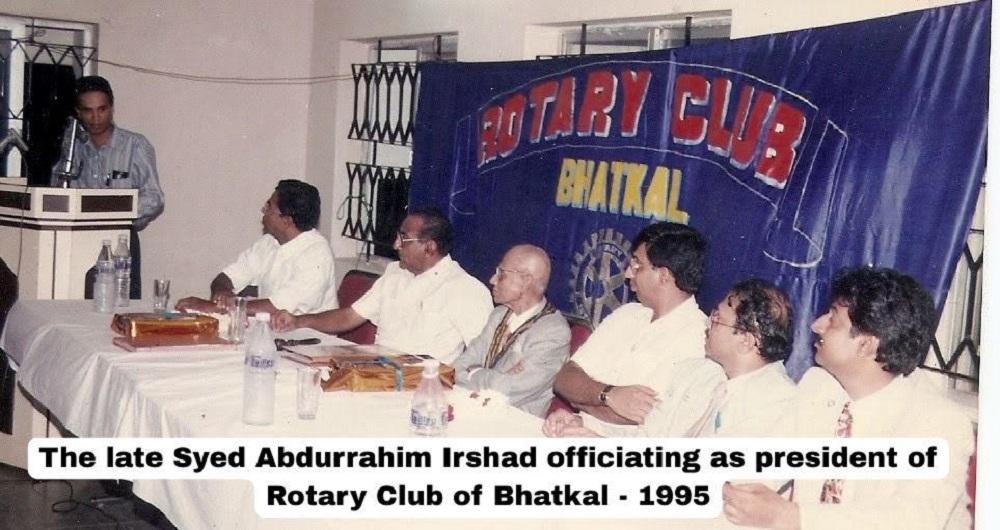
Irshad’s service to community organisations, though modest in scale, left a deep and lasting mark. As a Justice of the Peace in Mumbai, he demonstrated his commitment to justice and civic duty. He served as president of Bhatkal Muslim Jamat, Mumbai, leaving his imprint on the organisation. An active Rotarian, he also served as president of the Rotary Club of Bhatkal. He was vice-president of Majlise Islah wa Tanzeem, Bhatkal and an executive member of Anjuman Hami-e-Muslimeen, Bhatkal.
Irshad played a key role in bringing out Anjuman’s Golden Jubilee souvenir, lending his editorial acumen and copywriting skills to its editorial content and advertisements, and helping shape it into a memorable commemorative volume.
Farewell
This eminent voice of Navayath literature passed away in Bhatkal on November 28, 1996. Thirty years on, though he is no longer with us, his articles, nazms, geets and renditions continue to reverberate, finding new readers and listeners and stirring deep pride in our history, culture, heritage and customs.
( The author, Aftab Husain Kola, is a senior journalist from Bhatkal.)