

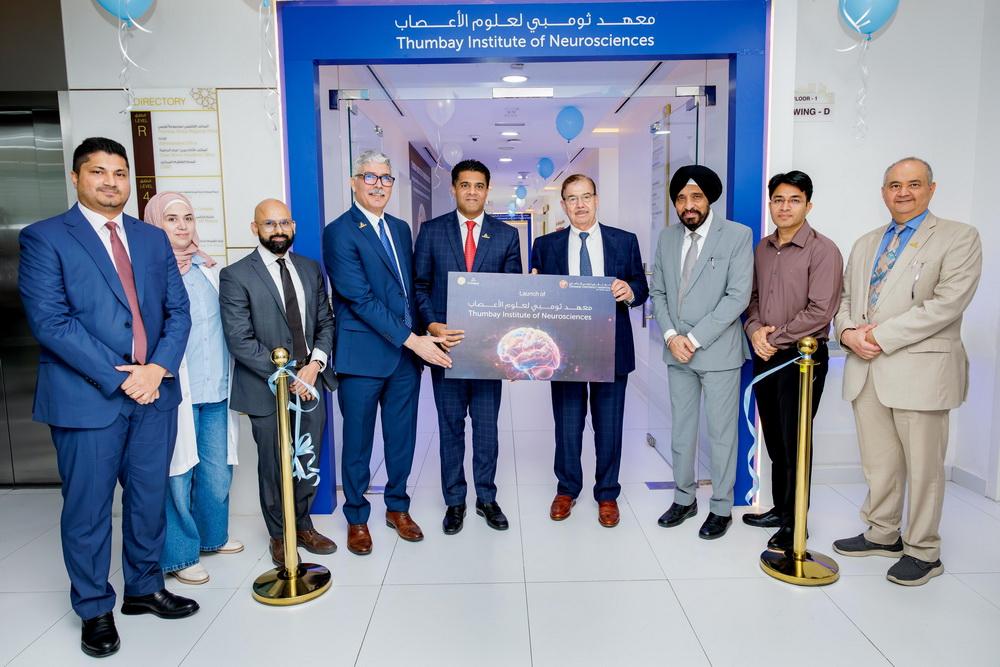
Ajman: Thumbay University Hospital on Wednesday inaugurated the Thumbay Institute of Neurosciences, a dedicated facility for the diagnosis, treatment and management of complex disorders of the brain, spine and nervous system.
The institute was inaugurated by Dr. Thumbay Moideen, Founder and President of Thumbay Group, in the presence of senior healthcare officials and dignitaries from across the network. Dr. Abdul Karim Msaddi, Consultant Chief Neurosurgeon and Chairman of the ArabSpine Course Diploma and Dubai International Spine Conference (DISC), attended the event as chief guest.
With the launch of the institute, the hospital aims to strengthen its specialised healthcare services and expand its capabilities in neurosciences, positioning itself as a key academic medical centre in the region.
According to Akbar Moideen Thumbay, Vice President of the Healthcare Division at Thumbay Group, neurological disorders require “precision, speed and multidisciplinary expertise,” adding that the institute brings together advanced technology, skilled specialists and a patient-focused approach under one roof.

The institute comprises a multidisciplinary team including neurosurgeons, neurologists, interventional radiologists, neuro-technicians and rehabilitation specialists. It will offer comprehensive neurology services for conditions such as stroke, epilepsy, Parkinson’s disease, multiple sclerosis, Alzheimer’s disease, migraines, neuropathy, vertigo and sleep disorders. Diagnostic facilities include EEG, EMG, nerve conduction studies and advanced neuro-imaging.
On the surgical front, the centre will handle complex brain, spine and nerve-related conditions using microsurgical and minimally invasive techniques. These include treatment for brain tumours, vascular abnormalities, traumatic brain injuries, spinal disorders and paediatric neurological conditions. Procedures such as cranioplasty, hydrocephalus management and advanced spinal fixation will be performed using neuronavigation and intraoperative neuromonitoring technologies.
The institute also integrates technology-driven neuro-rehabilitation services, offering therapies such as robotic rehabilitation, Transcranial Magnetic Stimulation (TMS), Hyperbaric Oxygen Therapy and exoskeleton-assisted rehabilitation systems. These services aim to improve patient mobility, independence and overall quality of life.
Hospital authorities said the institute will follow a structured care pathway, ensuring patients receive appropriate treatment at the right stage, with neurologists managing non-surgical cases and neurosurgeons handling cases requiring intervention.